
Every city plays Holi with colors. Banaras plays Holi with its soul.
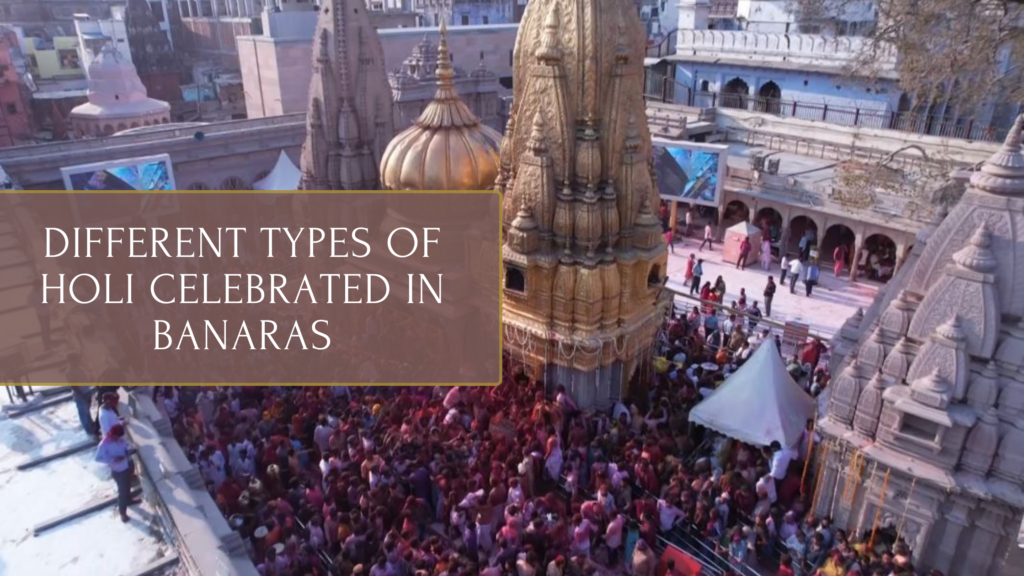
Where Holi Is Not Just a Festival — It Is a Philosophy
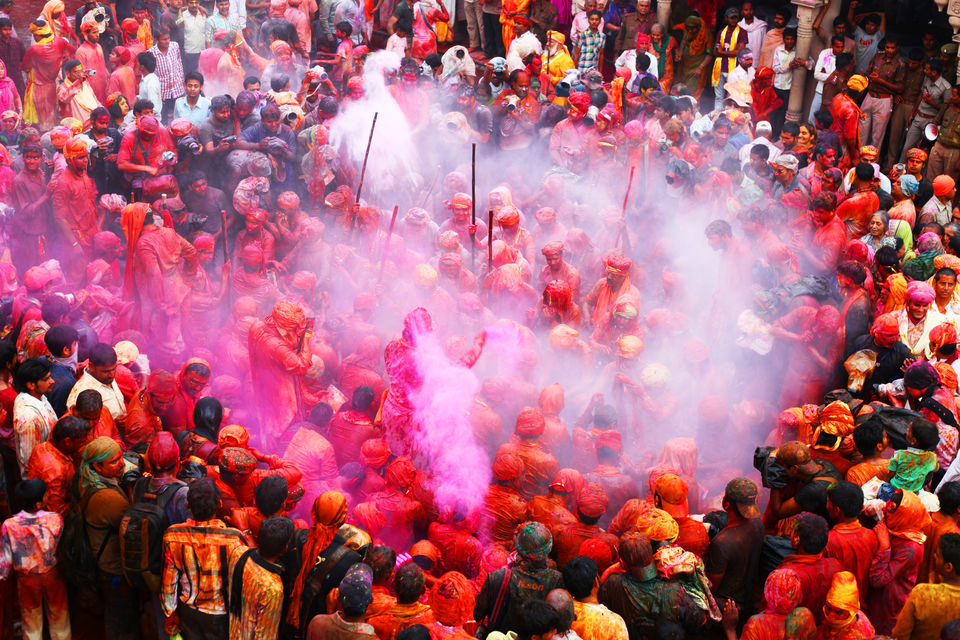
Most cities in India celebrate Holi for one day. Banaras celebrates it for six.
Most cities play Holi with gulal and water. Banaras plays Holi with flowers, with pyre ash, with processions that began at a Maharaja’s doorstep, and with chants that shake the stones of temples older than recorded history.
In Banaras, Holi is not a single event. It is a journey — from the divine union of Shiva and Parvati all the way to the cremation grounds of Manikarnika, from the color-drenched lanes of the old city to the peaceful ghats where the Ganga flows as if it has seen all of this before, a thousand times, and loves it every time.
Varanasi Holi festival includes the standard Holi, Masan ki Holi, and Rangbhari Ekadashi — each distinct from the other, each carrying its own spiritual weight and cultural character. KRAFTERIA
This guide takes you through every type of Holi that Banaras celebrates — what it means, where it happens, and why no other city in the world does Holi quite like this.
Type 1 — Rangbhari Ekadashi: The Holi That Begins With a Divine Wedding
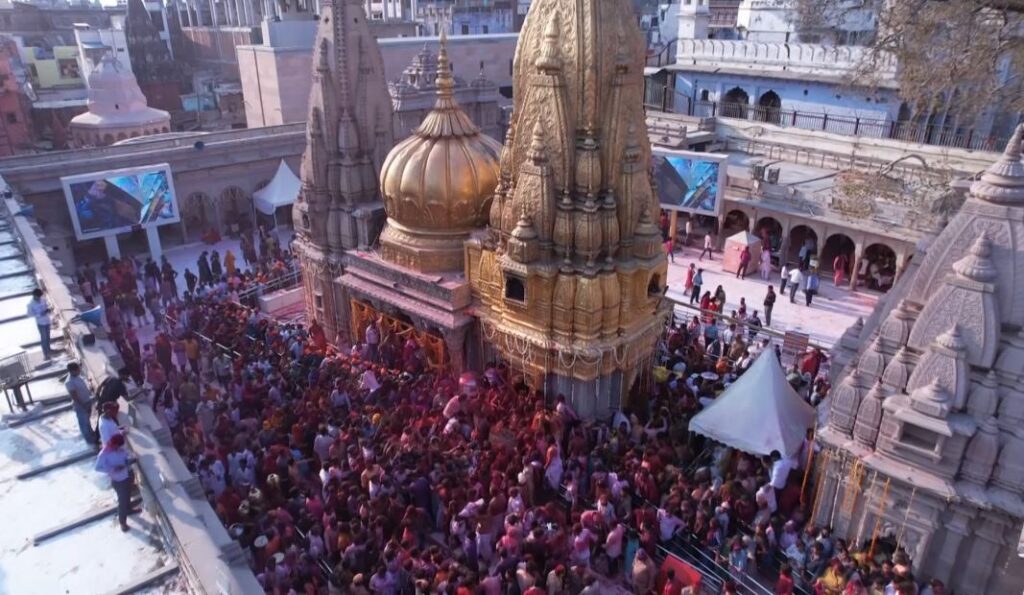
When: Five days before main Holi — Phalguna Shukla Ekadashi Where: Kashi Vishwanath Temple, Vishwanath Gali, Tedhi Neem
If you want to understand why Banaras celebrates Holi the way it does, you must first understand Rangbhari Ekadashi — because this is where it all begins.
According to tradition, Lord Shiva got married to Goddess Parvati on Mahashivratri. Two weeks later, on Rangbhari Ekadashi, Mahadev brought her to his city Kashi for the first time after his marriage. Rangbhari Ekadashi is celebrated to commemorate the reunion of Shiv and Shakti. IBEF
On this sacred occasion, Kashi Vishwanath is adorned with special decorations, and the city begins to immerse itself in the vibrant colors of Holi. A grand procession of Lord Shiva is carried out through the streets, where devotees joyfully throw abir and gulal. Antima Khanna
The procession starts from the Mahant’s house in Tedhi Neem and ends at the Kashi Vishwanath temple. The narrow lanes of Vishwanath Gali are packed like sardines with people and colors as the procession moves along. IBEF
The festival begins with the playing of gulal with Lord Shiva and Mata Gauri, symbolizing the blessing of a happy married life. Kashi Vishwanath and Mata Gauri are dressed up for the occasion, and the festival is marked with dancing and music, bringing the streets of Kashi to life. oriGIn
This is the only Ekadashi in the Hindu calendar dedicated to Lord Shiva — all others belong to Lord Vishnu. While Ekadashi is usually associated with Lord Vishnu, Rangbhari Ekadashi uniquely holds special significance for Lord Shiva devotees, connected to the joyful legend of Lord Shiva and Goddess Parvati returning to Kashi after their wedding. Directcreate
Rangbhari Ekadashi is therefore not a pre-Holi event. It is Holi itself — just celebrated six days early, in the most Banarasi way possible: through devotion, procession, and pure divine joy.
Type 2 — Masan Ki Holi (Bhasma Holi): Holi at the Cremation Ground
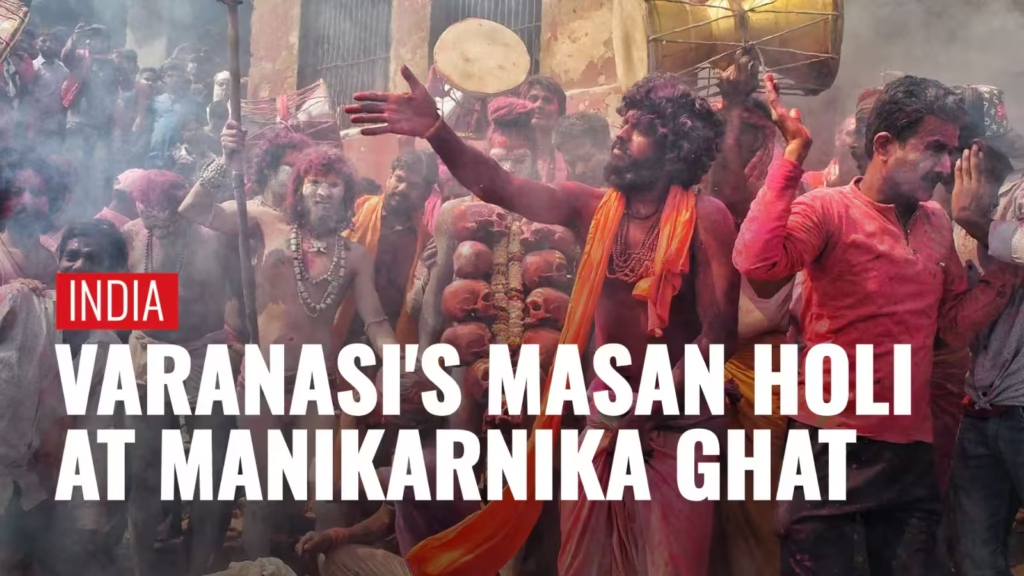
When: The day after Rangbhari Ekadashi Where: Manikarnika Ghat and Harishchandra Ghat
If Rangbhari Ekadashi is Holi at its most joyful, Masan Ki Holi is Holi at its most profound.
Masan Ki Holi is a ritual observed at Manikarnika Ghat — one of the oldest and continuously active cremation grounds in India. During this ritual, sadhus and devotees apply ash instead of colors, symbolizing detachment from material life and acceptance of mortality. The ritual is associated with Lord Shiva. D’source
In Varanasi, Holi is not played with colors and gulal but with the ashes of pyres. This Holi of Kashi is known as Masan ki Holi. ‘Masan ki Holi’ begins after the aarti of Mahashmashan Nath at Harishchandra Ghat in Banaras. On the day of Masan Holi, saints and Shiva devotees play Holi with the ashes of pyres after worshiping Lord Shiva. During this, Manikarnika Ghat resounds with the chants of ‘Har-Har Mahadev.’ District Varanasi
The mythology behind it is as powerful as the ritual itself. A day after Rangbhari Ekadashi, Shiva visits Masan to celebrate the same Holi with his Ganas, ghosts, and spirits that live at the cremation ground. The juxtaposition of these two events symbolizes how contradictory life can be — one reflects the engagement of Shiv with the world and its Moh Maya, while the other is completely dedicated to the Shiv who is a destroyer and ruler of shamshan, sanyas, and renunciation from the world.
As per the traditions, locals, Naga Sadhus and Aghoris flock to Manikarnika Ghat to play Holi with ashes of burning pyres. The festival starts with a grand aarti at the Masaan temple located near Manikarnika Ghat. Devotees smear the Shivling with ashes surrounded by the roaring sound of damru.
The contrast between Masaan Holi and Rangbhari Ekadashi is deeply symbolic. One represents detachment and acceptance of life’s ultimate truth, while the other represents joy, love, and celebration. The sequence of Masaan Holi followed by Rangbhari Ekadashi reflects a powerful spiritual teaching: before celebrating life, one must understand death. Before embracing joy, one must accept impermanence. This philosophy is unique to Kashi.
Masan Ki Holi is not for everyone. It is, however, an experience that changes everyone who witnesses it.
Type 3 — Lathmar Holi: When Women Rule the Festival
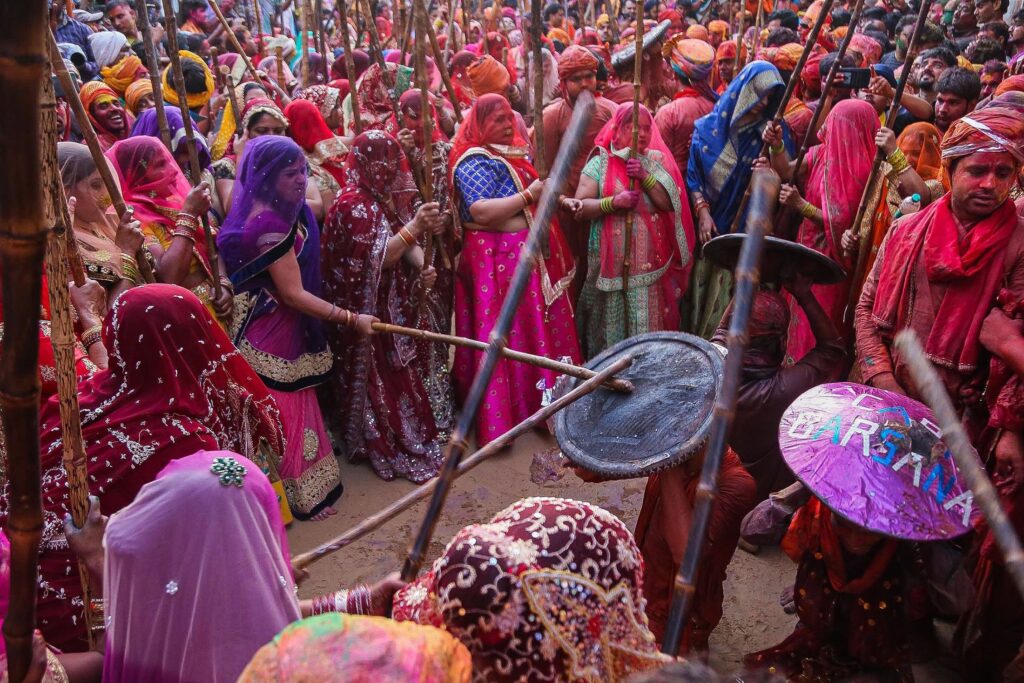
When: A few days before main Holi Where: Assi Ghat and nearby temples
Inspired by the legendary Lathmar Holi of Barsana — where Radha’s village women playfully beat Krishna’s companions with sticks — Banaras has adopted and joyfully made this tradition its own.
Inspired by the well-known Barsana Holi in Uttar Pradesh, the Lathmar Holi is one of the most spectacular Banaras Holi customs. This distinctive custom is observed in Varanasi near the Assi Ghat and other temples, where women playfully chase men with sticks as they protect themselves with shields. In Varanasi, this vibrant event gives Holi a more traditional and cultural feel. Google Translate
The energy of Lathmar Holi in Banaras is impossible to describe and unforgettable to witness. Women arrive armed with long decorated sticks. Men come equipped with shields — and considerably more caution. The laughter is loud, the colors are everywhere, and the playfulness is rooted in a tradition that stretches back centuries.
What makes Banaras’s version of Lathmar Holi special is the context it sits in. Here, it is not merely a reenactment of Radha-Krishna legend — it is woven into the city’s broader six-day Holi journey, one colorful thread in a much larger, deeper tapestry.
Type 4 — Ghat Holi: Holi on the Banks of the Ganga
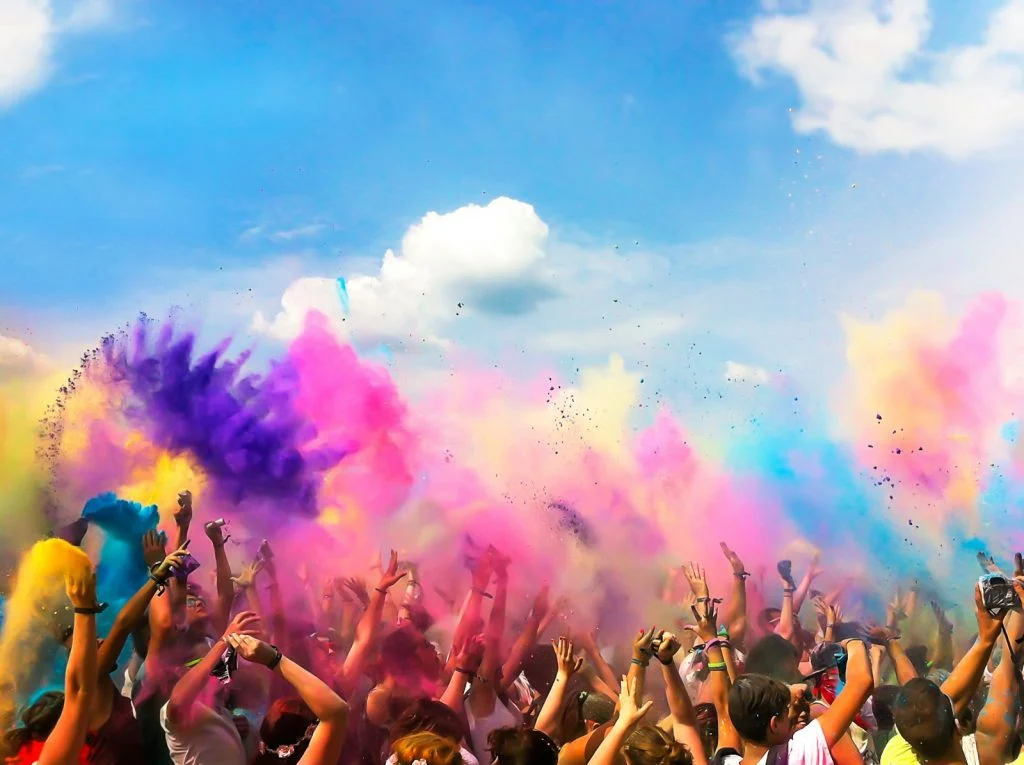
When: Main Holi day Where: Assi Ghat, Dashashwamedh Ghat, Panchganga Ghat
No city in the world plays Holi with a river the way Banaras does.
The most epic celebrations for Holi happen on Assi Ghat. There is endless gulaal in the air as well as on everyone’s previously white kurtas. What makes the Varanasi celebrations even more special is the fact that everyone is friends with everyone else on this holy festival, and by the afternoon you can see all of them sitting by the ghats and eating gujiya together. oriGIn
The most captivating backdrop for Varanasi Holi is provided by the Ganges ghats, where devotees gather at Dashashwamedh Ghat, Panchganga Ghat, and Manikarnika Ghat to observe the fusion of religious rites with colorful celebrations. Google Translate
Standing on a ghat during Holi in Banaras is one of those experiences that permanently occupies a corner of your memory. The Ganga flows. The colors fall. The chants and the folk songs and the dhol mix together into something that sounds less like noise and more like prayer.
The chants of Har Har Mahadev fill the air, merging devotion with festivity. Standing on the ghats of the Ganges, watching thousands of people playing Holi as the river flows calmly beside them, is a sight that stays with you forever. The celebration here is as much about peace as it is about exhilaration. D’source
Furthermore, Varanasi is home to some of India’s greatest classical musicians. During Holi, the air is filled with soulful bhajans and folk songs that make the celebrations feel like a divine orchestra. D’source
Type 5 — Holika Dahan: The Night the Evil Burns
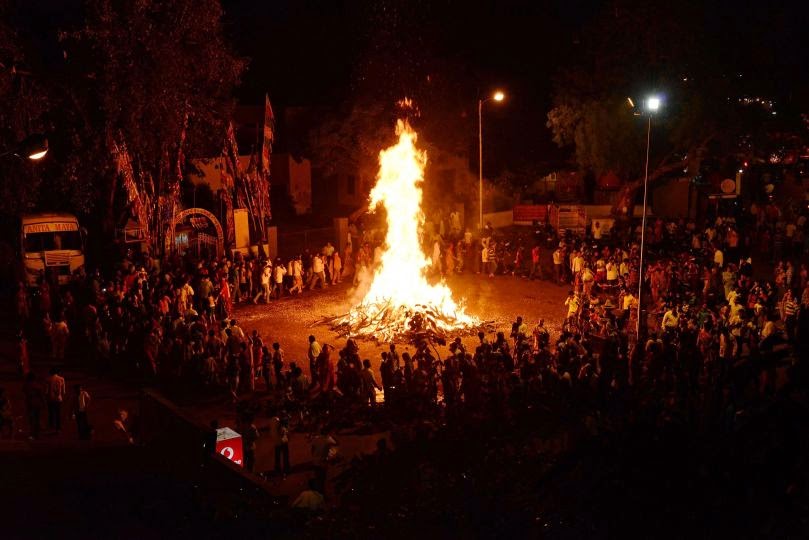
When: Night before main Holi Where: Neighborhood chowks, ghats, temple courtyards across Banaras
Every Holi begins the night before — in fire.
One day before the Holi celebration, Holika Dahan takes place, where massive bonfires can be seen, which are burnt in the hope of getting rid of all the evil spirits. KRAFTERIA In Banaras, Holika Dahan is not a quiet neighborhood ritual — it is a city-wide event. Every mohalla builds its own bonfire. Every ghat lights its own pyre.
The myth behind it is well known — the burning of Holika, the demoness, who tried to kill the devoted Prahlad and failed because devotion proved stronger than evil. But in Banaras, the story takes on extra weight. In a city where fire burns at Manikarnika twenty-four hours a day, every day of the year, the lighting of Holika Dahan feels less like a celebration of one mythology and more like a reminder of Kashi’s deepest philosophy: that fire does not destroy — it transforms.
After Holika Dahan, Banaras goes to sleep briefly — and wakes up at dawn ready to paint the world.
Type 6 — Main Holi (Dhulendi): The Day Banaras Turns Every Color at Once
When: Phalguna Purnima — the full moon day Where: Everywhere — every ghat, every lane, every mohalla
And then comes the day itself.
On Holi, Varanasi looks playful, bathed in all kinds of colors. Small groups of boys wander along the ghats, covered in vibrant hues of pink, blue, and yellow. You will see people wearing funny hats while others have their faces painted in every color you could possibly imagine. Antima Khanna
The streets of Varanasi — the real essence of Varanasi Holi is found in its narrow lanes, where children throw colors from balconies, shopkeepers offer sweets, and every passerby is welcomed with a joyful splash of color. D’source
Banaras Hindu University also becomes a festival ground of its own. If you want to witness how the younger generation celebrates Holi, head to BHU. The campus turns into a massive celebration with music, dance, and high-energy color play. D’source
The traditional drink of Holi, Bhang Thandai — the legendary Banarasi Thandai infused with nuts, saffron, and cooling herbs — is a must-try during Holi. It is both refreshing and an essential part of the festival. D’source Furthermore, the food of Holi in Banaras deserves its own celebration — gujiya, malpua, kachori sabzi, and the cloud-like malaiyo dessert that exists nowhere else in the world.
The main Holi of Banaras is chaotic, exhilarating, deeply human, and utterly magnificent. It is the culmination of a six-day spiritual and cultural journey that no other city in India offers.
The Six Days of Banaras Holi — A Complete Timeline
| Day | Celebration | Location |
|---|---|---|
| Day 1 | Rangbhari Ekadashi | Kashi Vishwanath Temple |
| Day 2 | Masan Ki Holi (Bhasma Holi) | Manikarnika & Harishchandra Ghat |
| Day 3–4 | Lathmar Holi | Assi Ghat & nearby temples |
| Day 5 | Holika Dahan | City-wide — ghats & chowks |
| Day 6 | Main Holi (Dhulendi) | Every ghat, lane, and mohalla |
What Makes Banaras Holi Unlike Any Other
Banaras Holi stands out because it blends public celebration with ritual continuity. In addition to street color play, the festival includes temple processions, chants, and Masan Holi at the cremation ghats. D’source
Other cities celebrate Holi as a festival of spring. Banaras celebrates it as a festival of existence itself — joyful and sorrowful, colorful and ash-grey, loud and deeply, profoundly quiet all at once.
In a city where the oldest living civilization still breathes, even Holi carries the weight of everything that has come before — and the lightness of everything that is yet to be.
This is Banaras. This is its Holi. And there is nothing else like it on earth.
FAQ — Holi in Banaras
Q1. How many days is Holi celebrated in Varanasi?
Holi in Varanasi is celebrated for six full days — beginning with Rangbhari Ekadashi and ending with the main Holi (Dhulendi) on the full moon of Phalguna. Each day carries its own unique tradition, ritual, and energy.
Q2. What is Masan Ki Holi in Varanasi?
Masan Ki Holi — also called Bhasma Holi — is one of the most unique Holi traditions in the world. Celebrated the day after Rangbhari Ekadashi at Manikarnika Ghat, it involves Naga Sadhus, Aghoris, and Shiva devotees playing Holi with ash from funeral pyres instead of colors. It symbolizes detachment from the material world and reflects Kashi’s deep philosophical connection with the cycle of life and death.
Q3. What is Rangbhari Ekadashi and why is it special in Varanasi?
Rangbhari Ekadashi is the day that marks the beginning of Holi in Varanasi, celebrated five days before the main festival. It commemorates Lord Shiva bringing Goddess Parvati to Kashi for the first time after their marriage. A grand procession moves through Vishwanath Gali to the Kashi Vishwanath Temple, with devotees throwing gulal and chanting Har Har Mahadev.
Q4. Where is the best place to experience Holi in Varanasi?
Each ghat offers a different experience. Assi Ghat is the most popular with travelers — open, energetic, and accessible. Dashashwamedh Ghat combines color celebrations with the grandeur of the Ganga Aarti setting. Manikarnika Ghat is where Masan Ki Holi takes place — deeply spiritual and unlike anything else. The old city lanes offer the most raw, immersive, neighborhood-level experience.
Q5. Is Lathmar Holi celebrated in Varanasi?
Yes. Inspired by the famous Lathmar Holi of Barsana, Varanasi celebrates its own version near Assi Ghat and nearby temples, where women playfully chase men with decorated sticks as men defend themselves with shields. It is one of the most energetic and joyful events of the Banarasi Holi season.
Q6. What food should I try during Holi in Banaras?
Banaras Holi food is legendary. Must-tries include Bhang Thandai — the saffron and dry fruit drink that is quintessentially Banarasi — along with gujiya (sweet dumplings filled with khoya), malpua, kachori sabzi, and malaiyo, the unique cloud-like creamy dessert found only in Varanasi.
Q7. Is it safe to witness Masan Ki Holi as a visitor?
Yes, visitors are welcome to witness Masan Ki Holi respectfully. It is a deeply spiritual and philosophical ritual, not a casual entertainment event. Visitors should dress respectfully, maintain quiet and reverence, avoid disrupting the ritual with loud behavior, and ideally go with a local guide who understands the space and its significance.